
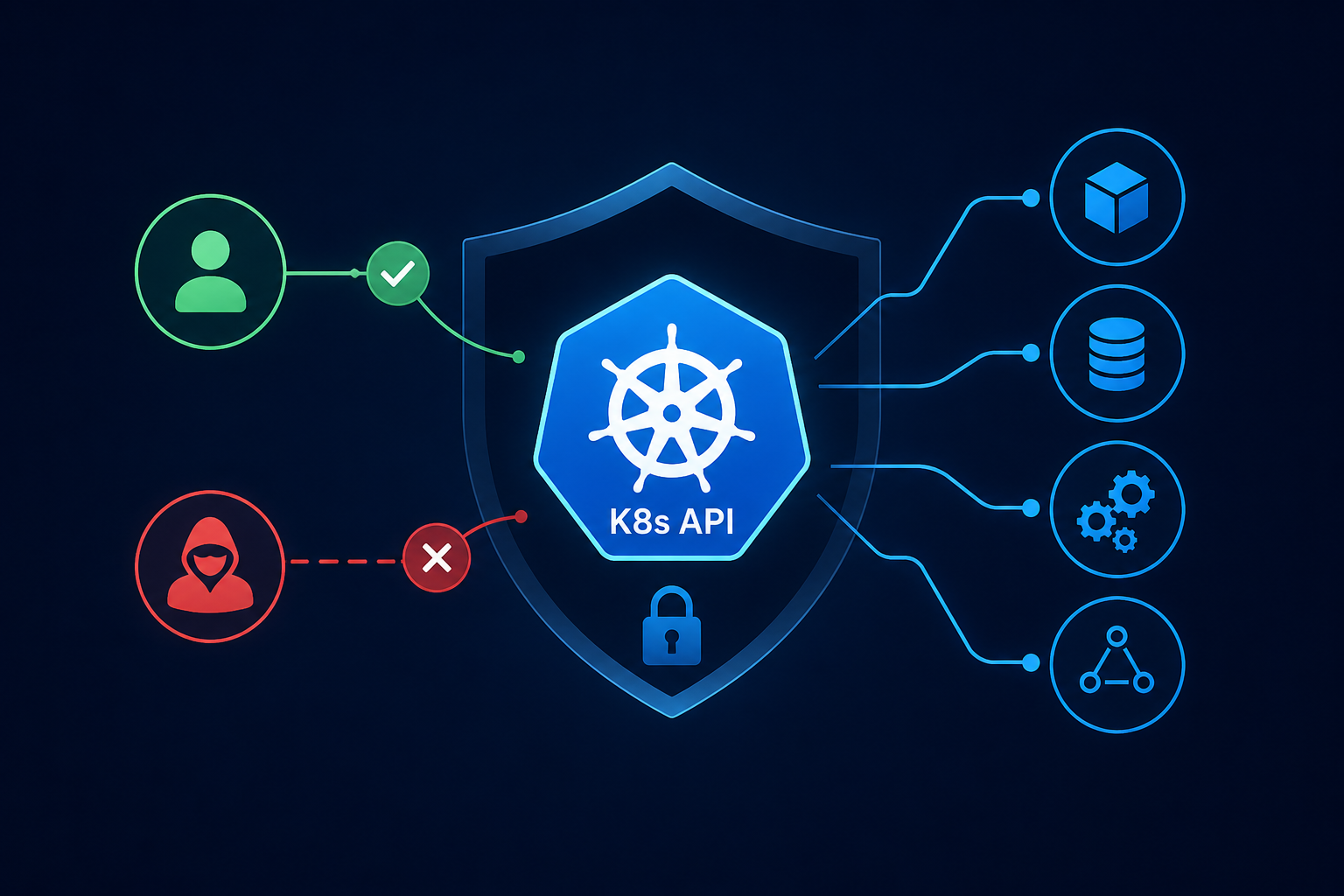
Kubernetes Security: Protecting API Servers, Endpoints, and Workloads
Kubernetes API Security: Protecting Endpoints and Cluster Infrastructure
Kubernetes has become the foundation of modern cloud-native infrastructure, helping organizations orchestrate containers, automate deployments, scale workloads, and manage distributed applications across cloud and hybrid environments. Often described as the “operating system for distributed containers,” Kubernetes provides the automation and flexibility needed to support modern application development at scale.
As Kubernetes adoption expands, so does the attack surface. APIs, ingress controllers, workloads, container runtimes, and cloud integrations have become increasingly attractive targets for attackers seeking access to sensitive applications and infrastructure. Because Kubernetes environments are highly dynamic, traditional perimeter defenses alone are no longer enough to maintain visibility and control.
To help organizations address these growing risks, Atomicorp is extending Kubernetes API security support with enhanced visibility into APIs, endpoints, workloads, and runtime activity across Kubernetes environments. By improving insight into the infrastructure components most commonly targeted in modern attacks, organizations can strengthen Kubernetes security while maintaining operational flexibility across cloud-native environments.
Request a Demo.
Why Kubernetes Security Matters
Production Kubernetes environments are complex and constantly changing. A single deployment may include multiple clusters, namespaces, ingress controllers, APIs, CI/CD pipelines, cloud integrations, and hundreds of containerized workloads—each scaling, updating, and moving across distributed infrastructure.
That flexibility helps teams ship faster, but it also expands the attack surface and makes visibility hard to maintain. Security teams struggle to keep an accurate picture of exposed services, vulnerable containers, and workload behavior, creating gaps across API security, container security, endpoint security, vulnerability scanning, runtime security, and compliance validation.
The risk is concentrated: a single exposed API or vulnerable workload can become a pathway into the broader cluster, its secrets, or the underlying cloud infrastructure. As cloud-native adoption grows, Kubernetes cluster security has become essential to both operational resilience and regulatory compliance.
Understanding the Kubernetes Attack Surface
Modern Kubernetes environments are highly dynamic. Containers are constantly being deployed, scaled, updated, and moved across distributed infrastructure. While this flexibility helps organizations innovate faster, it also creates a larger and more complex attack surface. Each component—APIs, ingress controllers, workloads, container runtimes, cloud integrations, as well as monitoring systems, and persistent storage—introduces a potential security exposure.
The most critical infrastructure elements to secure include:
| Component | Risk Level |
| Kubernetes API Server | Critical |
| etcd | Critical |
| kubelet API | Critical |
| Cloud IAM APIs | Critical |
| CI/CD Controllers | Critical |
| Ingress/Public APIs | High |
Attackers increasingly target Kubernetes environments because a single exposed interface can provide access to workloads, secrets, or even the broader cloud infrastructure.
Security teams therefore need visibility not only into containers themselves, but also into how services, APIs, and workloads interact across the cluster.
Discover how Atomicorp can help.
The Kubernetes API Server: The Most Critical Endpoint
The Kubernetes API server is the central control point for the entire cluster. Nearly every administrative or orchestration action flows through its REST API.
It manages:
- Deployments
- Namespaces
- RBAC permissions
- Secrets
- Networking policies
- Workload orchestration
Because of this, the API server is one of the highest-value targets in a Kubernetes environment. If compromised, attackers may be able to deploy malicious containers, access sensitive data, escalate privileges, or move laterally across cloud infrastructure.
Common Kubernetes API security risks include:
- Exposed API endpoints
- Weak RBAC policies
- Overprivileged service accounts
- Insecure ingress configurations
- Misconfigured cloud IAM permissions
Attackers also target kubelet APIs, ingress controllers, and vulnerable workloads to establish persistence inside the cluster. In many cases, runtime attacks originate from compromised containers that exploit weak permissions or unpatched software vulnerabilities.
This makes Kubernetes runtime security just as important as perimeter protection. Organizations need continuous monitoring of workloads, APIs, and container behavior to identify suspicious activity before attacks spread across the environment.
As Kubernetes adoption grows, organizations must treat API security as a core part of overall Kubernetes cluster security.
How Atomicorp Secures Kubernetes Environments
Atomicorp helps organizations improve Kubernetes security through automatic discovery, runtime monitoring, vulnerability detection, workload visibility, attack surface mapping, and Kubernetes SBOM generation across cloud-native environments.
Rather than focusing only on perimeter protection, Atomicorp helps security teams monitor the infrastructure elements most commonly targeted in Kubernetes attacks, including APIs, endpoints, workloads, and container runtimes.
Key capabilities include Kubernetes API and Endpoint Monitoring, Automatic Kubernetes and Container Discovery, Container Runtime Security, and Cloud-Native Detection and Response.
Kubernetes API and Endpoint Monitoring
Atomicorp monitors Kubernetes APIs, ingress controllers, and workloads for suspicious behavior, unauthorized changes, and unusual activity patterns. This helps organizations detect attacks targeting critical cluster infrastructure before they spread.
Request an Atomic OSSEC Demo.
Atomicorp also helps organizations strengthen Kubernetes endpoint security through web application firewall (WAF) protections designed to help secure ingress traffic, REST APIs, and externally exposed services within cloud-native environments.
Explore Atomic WAF.
Automatic Kubernetes and Container Discovery
Modern Kubernetes environments change continuously as containers are deployed, scaled, updated, and removed. Maintaining an accurate inventory manually is nearly impossible.
Atomic OSSEC automatically discovers Kubernetes clusters, containerized workloads, services, software components, and supporting infrastructure. The platform continuously inventories assets across cloud-native environments and automatically updates visibility as workloads change.
In addition to Kubernetes-native discovery, Atomic OSSEC automatically identifies containers running on any monitored system where the agent is installed. This provides security teams with visibility into containerized workloads, even outside formally managed Kubernetes environments.
The platform helps organizations to:
- Automatically discover Kubernetes workloads and containerized applications
- Enumerate services, ports, processes, and relevant file system paths
- Identify exposed assets and attack surface components
- Discover vulnerable software and packages
- Generate software bills of materials (SBOMs) for all Kubernetes components and containers
- Map relationships between containers, workloads, services, and infrastructure components
- Maintain continuous visibility as environments evolve
By automatically discovering and inventorying cloud-native assets, Atomic OSSEC helps organizations reduce blind spots, improve vulnerability management, and strengthen Kubernetes security without relying on manual asset tracking.
Atomic OSSEC also supports Kubernetes compliance initiatives aligned with CIS benchmark controls and broader cloud security requirements.
Container Runtime Security
Atomicorp provides runtime and inventory visibility into containers and Kubernetes workloads, including:
- Container vulnerability scanning
- Automatic container discovery
- Kubernetes inventory enumeration
- Kubernetes runtime
- Service, port, process, and path discovery
- Attack surface mapping
- SBOM collection and generation
- Service and ingress security
- Asset discovery and attack surface mapping
- Compliance validation
- File integrity monitoring (FIM)
- Intrusion detection (IDS)
- Runtime threat detection across running workloads
This visibility helps security teams identify vulnerable or compromised workloads across distributed environments.
Check out Atomic OSSEC.
Cloud-Native Detection and Response
Modern Kubernetes security requires continuous monitoring and operational visibility. Atomicorp extends cloud-native detection and response capabilities into Kubernetes environments by correlating workload activity, endpoint telemetry, and runtime security events across distributed infrastructure.
Importantly, Atomicorp focuses on visibility and alerting rather than automatically changing customer workloads or configurations. This allows organizations to maintain operational control while strengthening Kubernetes security across APIs, endpoints, and containerized workloads.
As Kubernetes environments continue to grow in scale and complexity, organizations that improve visibility into their Kubernetes attack surface will be better positioned to reduce risk, strengthen compliance, and protect modern cloud-native infrastructure.
Contact Us.
Request Demo.