
Digital Evidence Collection: What Happened, When, and How?
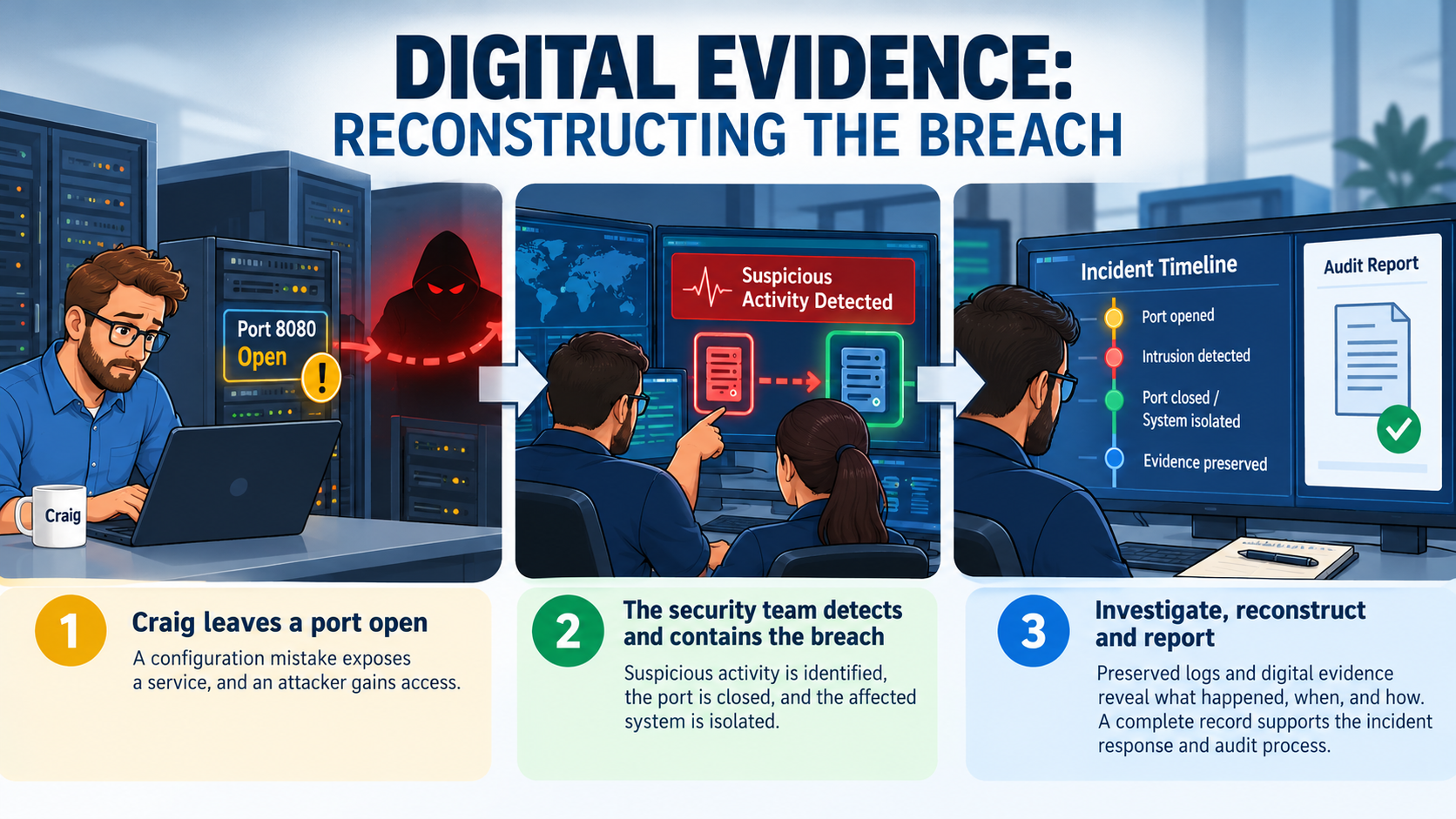
Digital evidence collection provides the records needed to investigate cyberattacks, reconstruct security incidents, and establish what happened, when, and how. Combined with forensic evidence preservation and a documented chain of custody, these records support incident response, security analysis, and compliance investigations.
Just like investigators on a crime scene investigation (CSI) television show, cybersecurity professionals must find, collect, preserve, and analyze evidence. Instead of fingerprints and physical objects, they examine digital artifacts from computers, servers, applications, and networks.
The records can also reveal how attackers gained access, what they did, and which systems were affected. But collecting evidence is only part of the process. Organizations must also preserve its integrity and document how it was handled.
What Is Digital Evidence in Cybersecurity?
Digital evidence is electronically stored or transmitted information relevant to an investigation. It includes security logs, authentication records, file modifications, running processes, network connections, and suspicious software.
During a digital forensic investigation, analysts examine these artifacts to reconstruct events and distinguish malicious activity from human error or legitimate operations.
Digital evidence may be volatile, such as information held in system memory, or persistent, such as stored logs and files. Volatile evidence can disappear when a system is restarted, while persistent records may be modified, deleted, or overwritten. Both require timely collection and proper preservation. Suspected malware should be examined separately in a safe, isolated test environment (sandbox).
Why Digital Evidence Collection Is Crucial
Digital evidence allows investigators to move beyond individual security alerts and establish what actually occurred. For example, an intrusion detection alert might identify suspicious network activity. Authentication logs could reveal an unusual login, while file integrity monitoring (FIM) records might show unauthorized modifications to a critical configuration file.
Together, these records can reveal a broader attack sequence.
Digital evidence collection supports:
- Attack reconstruction: Establish when an incident began, how attackers gained access, and what followed.
- Incident response: Identify compromised accounts, affected systems, and malicious activity.
- Damage assessment and recovery: Determine what was accessed, modified, or disrupted and what must be restored.
- Compliance and accountability: Supply records for audits, security reviews, and potential legal proceedings.
Digital Evidence Collection Begins Before an Investigation
Organizations cannot assume that evidence will still exist when an incident is discovered. Logs may be overwritten, malicious files deleted, and system activity lost during normal operations. Continuous security monitoring can preserve important records before suspicious activity is recognized.
Several technologies contribute:
- EDR collects endpoint activity, alerts, and information about suspicious files and processes, including from memory.
- SIEM centralizes security logs and events from multiple systems for correlation and investigation.
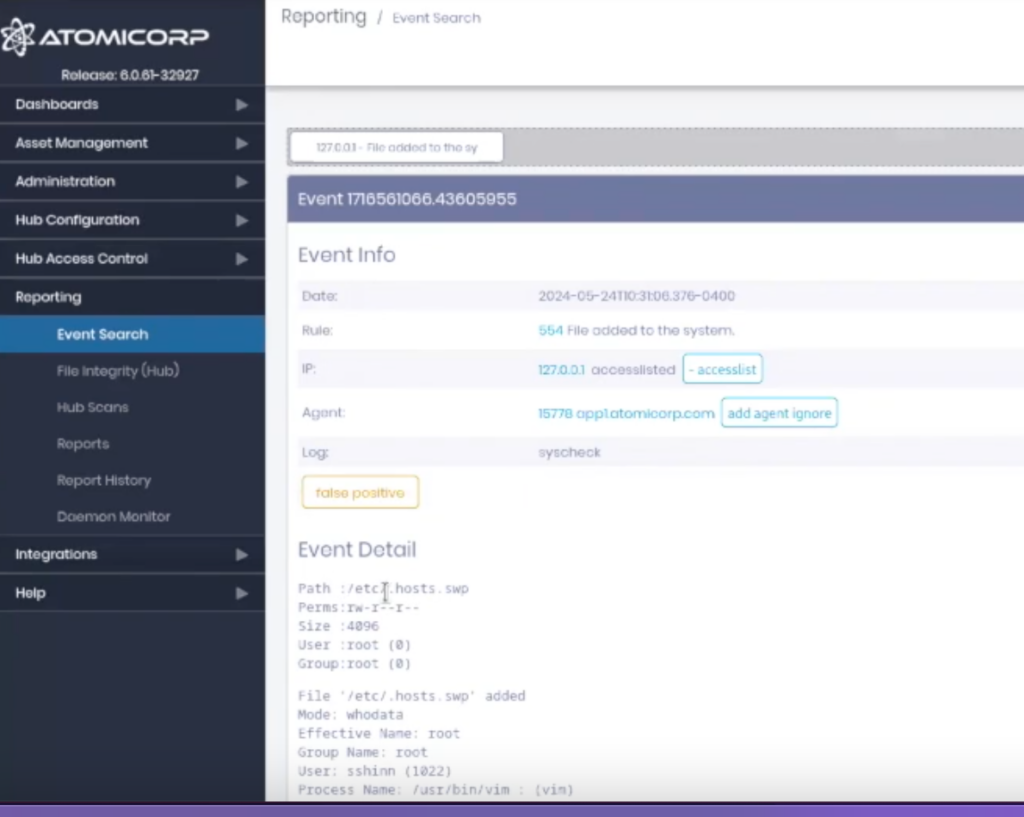
- FIM detects modifications to monitored files and configurations, documenting what was modified, when, and by whom.
- Audit logging records relevant user and system activities, including authentication and administrative actions.
Time synchronization across systems also supports accurate event timelines. (See Figure 1.)
Figure 1. Who, What, Where, When Data Captured by FIM
Discover the EDR, SIEM, FIM and audit logging capabilities in Atomic OSSEC.
Preserving Evidence and Maintaining Chain of Custody
Chain of custody is the documented history of evidence from collection through preservation, examination, transfer, and eventual disposition. It establishes who handled the evidence, when, and what actions were performed.
For example, an investigator collecting a suspicious executable from a compromised server might calculate its cryptographic hash, record its origin and collection time, and preserve it in controlled storage.
Cryptographic hashing algorithms, such as SHA-256 and SHA-512, create digital fingerprints that investigators can compare to verify that evidence contents have not been altered.
Other essential digital evidence management practices include:
- Secure storage and access controls: Prevent unauthorized modification, deletion, or access.
- Audit trails: Document evidence access, examination, and transfers.
- Evidence inventories: Record artifact origins, collection methods, and storage locations.
- Retention policies: Preserve evidence for required investigative, regulatory, or legal periods.
- Documented procedures: Establish consistent collection, preservation, and handling practices.
Digital evidence management systems can organize these records, enforce permissions, and track custody transfers.
As outlined in NIST SP 800-86, “Guide to Integrating Forensic Techniques into Incident Response,” evidence handling should be integrated into incident response procedures.
Digital evidence collection supplies the information needed for an investigation. Chain of custody documents how that evidence was handled.
How Atomic OSSEC Supports Digital Evidence Collection
Atomic OSSEC combines endpoint detection and response (EDR), SIEM, file integrity monitoring, intrusion detection, and other security capabilities that generate valuable investigative records.
Security teams can examine endpoint activity alongside other security events to reconstruct suspicious behavior and investigate potential attacks.
Relevant capabilities include:
- Endpoint and system telemetry for security event analysis
- Centralized logging, monitoring, and event correlation
- File integrity monitoring of critical files and configurations
- Audit records supporting investigations and accountability
- Threat detection, automated response, reports, and dashboards
Atomic OSSEC supports agent-based and agentless monitoring, extending security visibility to legacy and end-of-life systems. These capabilities provide valuable information for cybersecurity forensics. Formal evidence preservation and chain-of-custody procedures remain necessary when records must satisfy investigative or legal requirements.
Learn more about Atomic OSSEC EDR and its integrated security monitoring capabilities.