
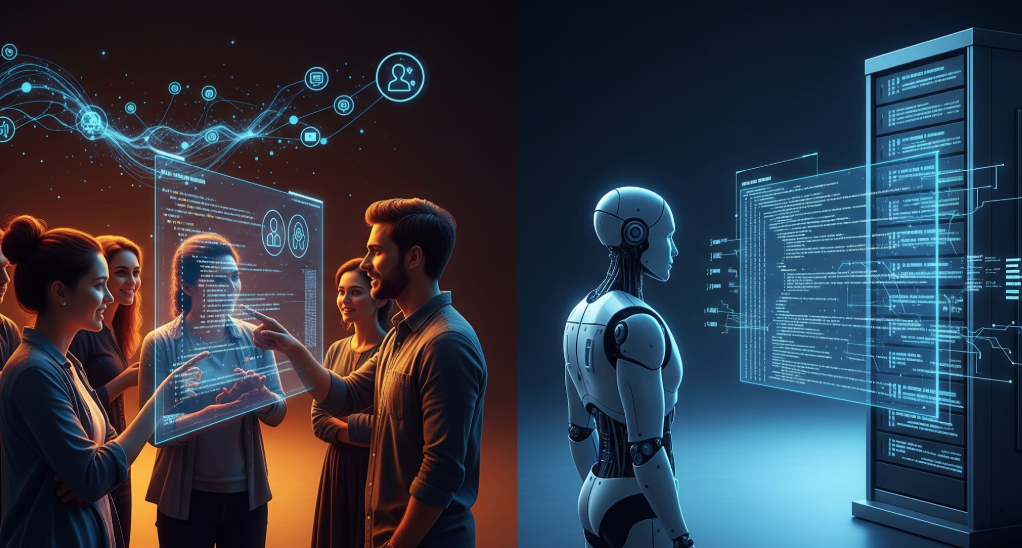
AI Coding Tools Aren’t Secure: Hidden Risks in AI-Generated Code
AI coding tools can dramatically accelerate development, but they don’t inherently improve security. At Atomicorp, we take a security-first approach by defining requirements and threat models before any code is written or AI prompt is issued, ensuring security is built in from the start. Learn more about Atomicorp.
Explore Atomicorp log-based intrusion detection and software integrity monitoring solutions.
Don’t Assume AI Coders Engineer With Security in “Mind”
So you’ve incorporated AI coding tools like Cursor into your organization. At their core, these systems are large language models (LLMs)—that is, pattern-matching engines driven by prompts and trained on massive datasets. Strip away the mystique, and that’s all they are.
Yes, they can make developers faster. But faster doesn’t mean safer.
From a secure coding perspective, the story is far more complicated. It is also far more concerning.
AI Coding Tools: Productivity Gains, Security Tradeoffs
AI-generated code can accelerate development, but it does not inherently improve security. In fact, evidence suggests the opposite. Research from Varicode found that AI-generated code introduced security flaws in 45 percent of test cases. Meanwhile, CodeRabbit reported that AI-authored changes produced 10.83 issues per project, compared to 6.45 for human-only efforts—a 1.7x increase in problems.
At the same time, AI governance frameworks are rapidly emerging. Global standards like the OECD AI Principles and UNESCO’s ethics recommendations have laid the groundwork, while organizations such as NIST and ISO are defining operational and auditable practices. Regulations like the EU AI Act are beginning to formalize enforcement.
These frameworks are converging into a layered model:
- Global norms define principles
- Operational frameworks define process
- Standards define auditability
- Regulations define compliance
But here’s the critical question: Which of these ensures that AI-generated code is actually secure?
The answer is none of them—at least not directly.
Where AI Governance Meets Software Security
There is no single standard dedicated to securing AI-generated code. Instead, security emerges from the intersection of AI governance, software security, and supply chain integrity.
Frameworks like the NIST AI Risk Management Framework focus on risks such as hallucinated outputs, data poisoning, and supply chain exposure. ISO/IEC 42001 emphasizes lifecycle risk tracking, auditability, and control over AI outputs. The EU AI Act requires robustness and cybersecurity, particularly for high-risk systems.
However, these frameworks stop short of defining secure coding practices.
That responsibility falls to traditional software security standards.
The Reality: AI Code Is Untrusted Code
From a security standpoint, AI-generated code is not special. Mature frameworks treat it exactly as they would any third-party contribution: untrusted until proven otherwise.
The NIST Secure Software Development Framework (SSDF) is especially relevant here. It defines requirements for secure coding, code review, vulnerability detection, and supply chain integrity. When applied to AI, the implication is clear: every generated output must go through the same rigorous validation pipeline as external code.
Emerging guidance reinforces this position. The OWASP Top 10 for LLM Applications highlights risks like prompt injection, insecure output handling, and training data poisoning—all of which can directly lead to vulnerable or malicious code. SBOM standards such as SPDX and CycloneDX further stress the importance of visibility into dependencies, especially since AI tools may introduce libraries that developers did not explicitly choose.
In short, AI doesn’t reduce risk—it redistributes it.
AI Changes the Economics of Software Development
AI does not eliminate the complexity of secure software engineering—it changes the economics around who can produce software and how quickly it gets deployed.
For experienced engineers, AI can accelerate implementation and reduce repetitive work. But faster code generation is not the same as faster understanding. Developers still need to understand architecture, trust boundaries, authentication models, dependency risks, operational constraints, and attacker behavior.
The problem is that AI dramatically lowers the barrier to producing software artifacts. As software creation becomes easier, more applications will be built by individuals and organizations with limited engineering or security experience. At the same time, professional developers face growing pressure to ship faster and review less.
The result is likely to be a sharp increase in vulnerable systems. This is not because AI intentionally creates insecure code, but because secure software development has never been reducible to code generation alone.
As software generation accelerates, the ability of organizations to thoroughly validate, understand, and secure every component may not scale at the same rate.
Security is a process. It requires formal design, validation, operational controls, testing, monitoring, governance, and continuous skepticism. Static analysis, DAST, authentication checks, and automated tooling all help, but none can independently guarantee security.
AI accelerates software creation. It does not automate trustworthiness.
As implementation accelerates, the importance of formal architecture, threat modeling, and system design increases rather than decreases.
Code generation is becoming commoditized. Secure system engineering is not.
The Hidden Danger: Automation Bias
One of the most overlooked risks in AI-assisted development is psychological.
AI-generated code often appears clean, structured, and confident. That presentation can lead developers to trust it more than they should—a phenomenon known as automation bias. Code that takes seconds to generate may require hours to properly review, yet it often receives less scrutiny simply because it “looks right.”
This is where vulnerabilities slip through.
Without deliberate countermeasures—such as clearly labeling AI-generated code, enforcing stricter review protocols, and running software integrity monitoring—organizations risk lowering their security standards without realizing it.
Contact Us about ensuring the integrity of your software development.
Secure Development Still Requires Humans
AI can assist, accelerate, and augment, but it does not understand context the way humans do. It lacks awareness of business logic, system architecture, and attacker intent. It cannot think adversarially or anticipate how seemingly minor flaws might be exploited in complex environments.
And it is not immune to failure. AI systems can be biased, poisoned, overly confident, or simply wrong. In some cases, they may even introduce zero-day vulnerabilities that are difficult to detect because they do not match known patterns.
For these reasons, secure development must remain fundamentally human-driven.
A Practical Model: Defense-in-Depth Development
A resilient approach to AI-assisted development is not to avoid AI, but to contain and control it within a layered security model.
At Atomicorp, this begins with security-first design, which involves defining requirements and threat models before any code is written, including before AI prompts are issued. Security is embedded into the architecture, not bolted on afterward.
Read about our Atomic OSSEC endpoint detection and response (EDR) software solution.
From there, AI usage itself must be governed. Prompts should be treated as auditable artifacts, with safeguards to prevent sensitive data exposure and restrictions on where AI can be applied. “Vibe coding” may accelerate ideation, but without controls it can also introduce instability, hidden bugs, and loss of traceability.
Because AI tools can hallucinate dependencies or suggest incorrect libraries, all components must be verified against trusted sources. Maintaining SBOMs, validating documentation, and pinning dependencies are essential to preventing supply chain risks.
Once code is generated, it must pass through the same layered validation pipeline as any other contribution. Static analysis helps identify known vulnerability patterns and misconfigurations before execution. Dynamic testing and fuzzing expose runtime issues that static tools may miss. Automated testing ensures that functionality and security regressions are caught early and consistently.
Critically, AI-generated code should always be explicitly flagged and subjected to human review. In high-risk areas, secondary peer review adds another layer of scrutiny, helping uncover subtle logic flaws and architectural inconsistencies.
Security does not end at deployment. Continuous monitoring—through telemetry, anomaly detection, and vulnerability scanning—ensures that issues emerging in real-world conditions are identified and addressed quickly.
Humans Aren’t Perfect, But the Process Matters
Human developers introduce bugs, too. They miss things. They make assumptions.
That’s why secure development has never depended on individuals—it depends on process.
The most effective pipelines combine automated scanning, continuous testing, and human review into a cohesive system that catches issues before they reach production. Standards like OWASP Secure Coding Practices and NIST SSDF reinforce this idea: security is not a tool or a feature—it’s a discipline.
AI doesn’t change that. It simply adds a new variable.
Bottom Line: AI Coding Tools Require Human Oversight
AI coding tools are powerful accelerators, but they are not security engineers. They generate code based on patterns, not understanding. They do not reason about risk, intent, or adversarial behavior.
Assuming they do is a mistake.
The safest path forward is not blind adoption, but controlled integration. Treat AI as a productivity tool within a human-verified, defense-in-depth development model. In this approach, AI helps build faster, while human expertise ensures what gets built is actually secure.
Because in the end, secure software isn’t created by confidence.
It’s created by skepticism.
Contact Us to discuss zero trust approaches to AI coding and AI-augmented software development.
Schedule an Atomicorp demonstration.