CVE Research Tools from Atomicorp
Atomicorp CVE Research Tools provide answers during uncertain times.
A new CVE has been identified! How do you determine whether it affects your environment, whether a patch is available, and what protections may already stand between the vulnerability and an attacker?
Atomicorp CVE Research Tools at research.atomicorp.com provide a place to investigate selected CVEs and see how Atomicorp protections performed during testing. Security and SOC engineers can search CVE Research Notes by vulnerability, affected product, vendor, Common Weakness Enumeration (CWE), severity, and WAF or EDR rule.
Research Your Security Response to CVEs
When a new CVE is announced, an important question for web application defenders is: How does my EDR and WAF respond to this type of attack?
Atomicorp CVE Research Notes make that question easier to investigate.
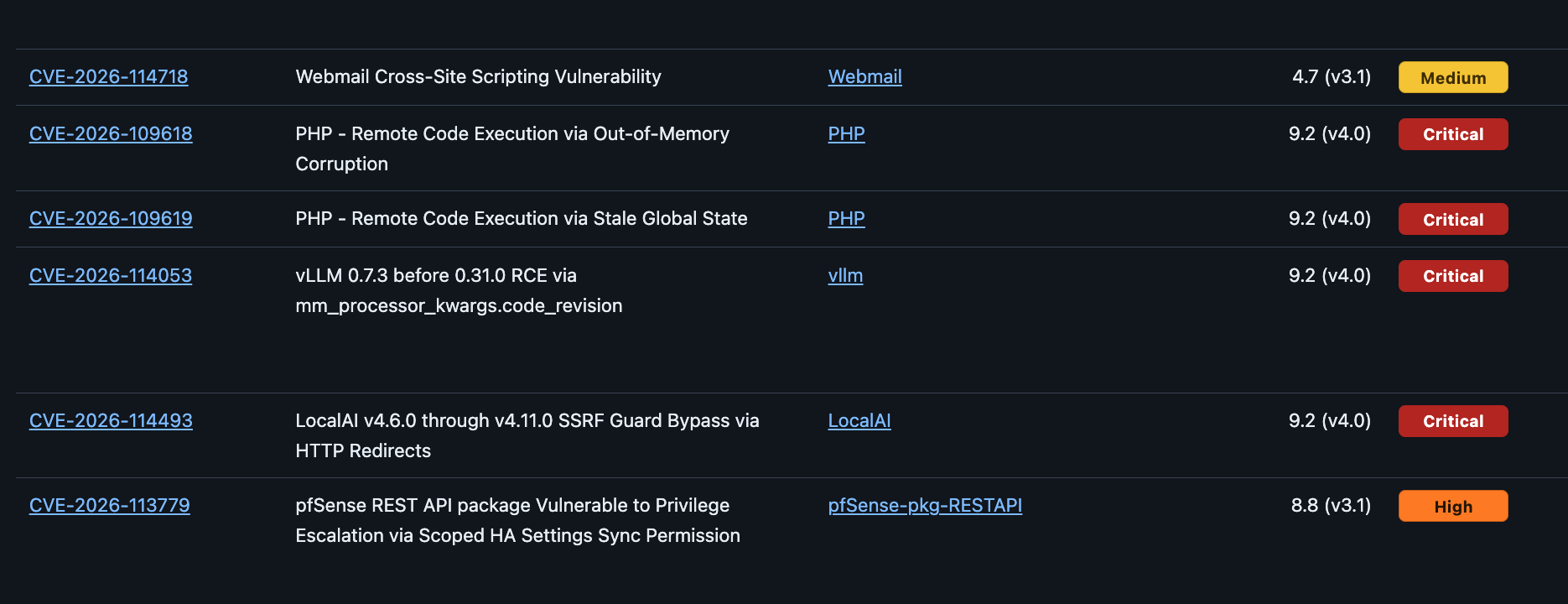
Search thousands of selected CVE research findings to see affected products, vulnerability details, attack patterns, severity, and the specific Atomicorp security rules observed during testing.
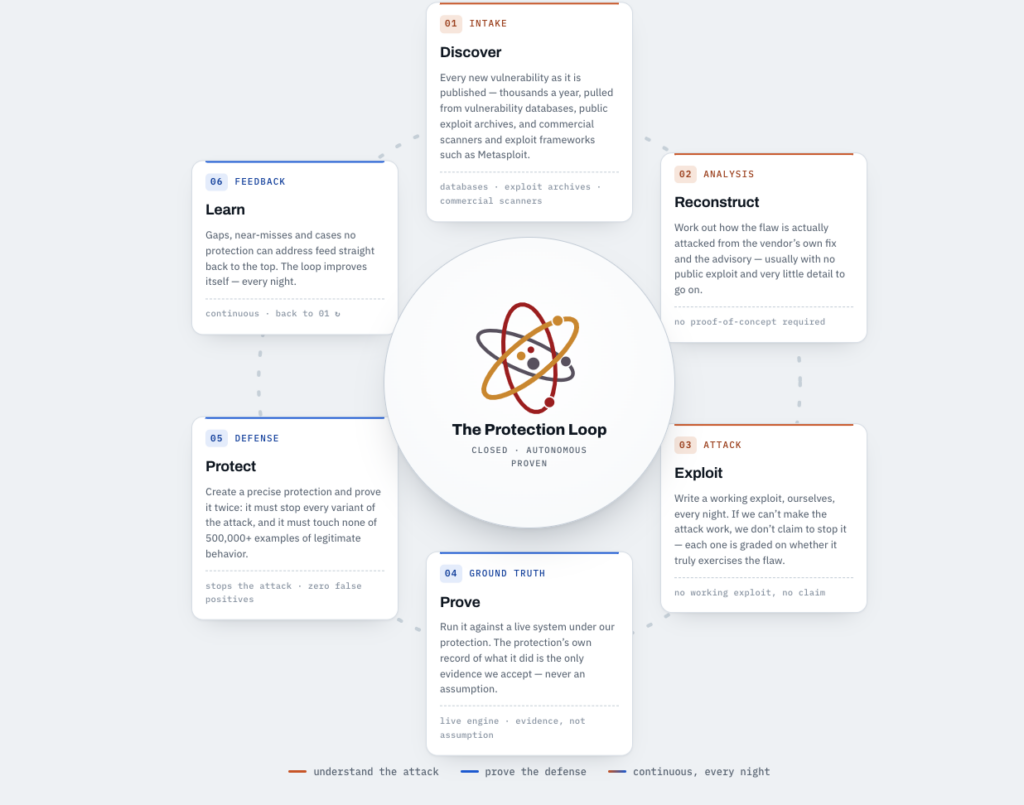
Behind the site is the Atomicorp AI Research Framework. It helps researchers turn vendor advisories—including advisories without a published exploit—into testable attack-surface probes. Those probes are replayed against a live EDR and WAF (see Sidebar Note 1).
The resulting findings are based on actual ModSecurity audit records rather than an AI-generated verdict about whether a vulnerability is protected.
Visitors can use the CVE research tool to:
- Research a CVE, product, vendor, CWE, or security rule.
- See how broader attack-class protections relate to newly disclosed vulnerabilities.
- Review evidence behind selected advanced OSSEC EDR and WAF research findings.
- Follow frequently updated research as new vulnerabilities emerge.
From CVE Research to Vulnerability Mitigation
Finding a new vulnerability is only the beginning. The CVE Research Tools also include a CVE research lifecycle area that connects vulnerability research to the steps organizations may need to take next.
- Look up the vulnerability. Start with available CVE information and Atomicorp research findings to understand the vulnerability, affected software, severity, and associated attack patterns.
- Determine whether you are affected. Identify whether the vulnerable product or software version exists in your environment. Vulnerability scanning and software inventories can help answer that question.
- Check if Atomicorp is already protecting you. The CVE is analyzed and, if exploits are published, Atomicorp will reverse-engineer and run the exploits through our WAF to test and determine if the exploits were stopped. The CVE research tool also determines which rules are stopping it.
- Check for a patch. Determine whether the vendor has released a security update and whether it can be safely deployed to the affected system.
- Address vulnerabilities that cannot immediately be patched. Some patches cannot be applied right away because of compatibility, availability, testing, or legacy-system constraints. Where applicable, WAF-based vulnerability shielding and virtual patching can provide a compensating layer of protection against exploit attempts while the underlying vulnerability remains.
Explore CVE, Product, Vendor, CWE, and Security Rule Research
Atomicorp Research Notes provide several ways to approach vulnerability research depending on what you already know.
- Product CVE Research categorizes published Atomicorp CVE research notes by affected product, making it easier to investigate vulnerabilities associated with software in your environment.
- Vendor CVE Research organizes published research by the affected software vendor.
- CWE Research Context connects Common Weakness Enumeration categories with published Atomicorp CVE research and active EDR and WAF protections. The CVE pages provide findings for individual vulnerabilities, while CWE research provides broader context around classes of software weaknesses and related attack methods.
The site also provides Atomicorp security rule documentation, including operational information and links to published CVE research findings associated with those rules.
The Research Notes are updated frequently as new findings become available, and the research site is available in both light and dark modes.
What an Atomicorp CVE Research Note Means
An important caveat applies when interpreting the research.
Atomicorp CVE Research Notes document selected positive research findings, including testing results, engineering observations, attack-pattern analysis, and security rule interactions. They are not a CVE coverage matrix, certification list, completeness claim, or comprehensive list of vulnerabilities mitigated by Atomicorp products.
A published CVE Research Note documents a positive finding for that vulnerability. If a CVE is absent, no conclusion should be drawn about its protection status.
Explore Atomicorp Research Notes and CVE research.
Atomic OSSEC EDR-Based CVE Scanning and Detection
Scan continuously for vulnerabilities in your IT environment. The Atomic OSSEC endpoint detection and response (EDR) solution works across current and legacy Windows, Linux, and Unix-based environments to inform you where CVEs and CWEs exist, enabling you to remediate in a timely manner or deploy Atomicorp WAF solutions to block exploit attempts.
Learn more about Atomic OSSEC with vulnerability scanning, file integrity monitoring, compliance benchmarking, active response, and more.
ModSecurity Rules and WAF Protection
Looking for continuously updated ModSecurity rules or an affordable WAF solution to protect web applications and APIs?
Atomicorp provides commercial ModSecurity rules and WAF solutions designed to help defend against OWASP Top 10 risks, Layer 7 DoS attacks, SQL injection, XSS, CSRF, XXE, known vulnerability exploits, and other web threats.
Protect websites, web applications, APIs, proxies, and load balancers with Atomic ModSecurity Rules and Atomic WAF.
Visit the Atomicorp ModSecurity Solutions Page.
Sidebar Note 1: Atomicorp CVE Research Tools — Methodology
Atomicorp uses an automated research and protection cycle to identify vulnerabilities, analyze potential exploits, and develop protective rules for its security solutions.
Running autonomously every day, the research engine draws on vulnerability and exploit intelligence from sources including NIST, MITRE, Metasploit, Exploit Database, and Nuclei. The process continues even when no new CVEs are published.
When a potential vulnerability requires further investigation, the engine uses AI-assisted analysis to evaluate available evidence, investigate possible false positives, and develop or test potential exploits. Findings can then inform the creation of protective rules for applicable WAF and EDR defenses.
New rules are re-tested to evaluate their effectiveness, and the research cycle continues. This ongoing process helps Atomicorp adapt its defenses as vulnerabilities and attack techniques evolve.