
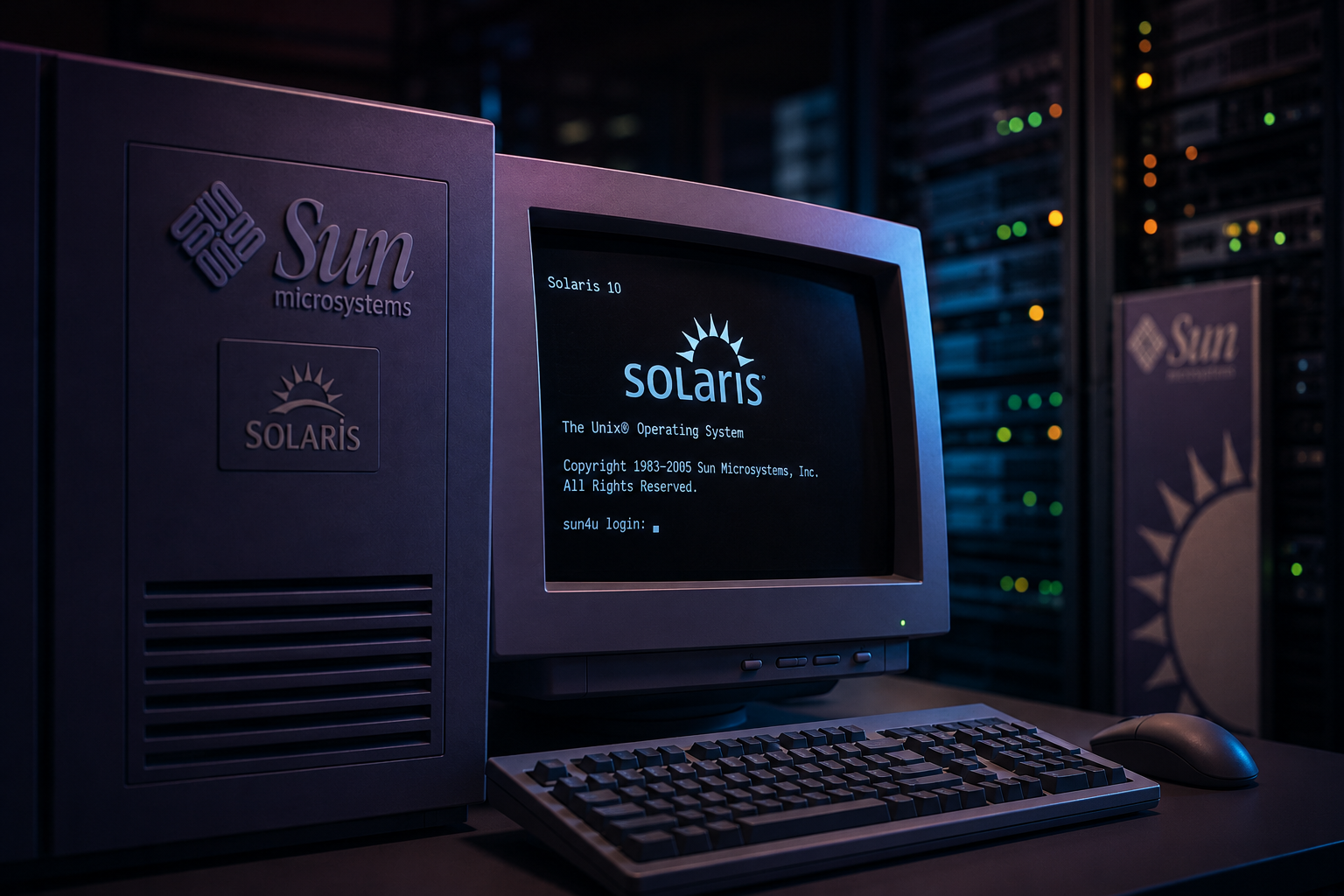
Legacy and End-of-Life Solaris Vulnerability Detection
Solaris Vulnerability Detection From Atomicorp
Decades after its introduction, Oracle Solaris still powers critical workloads in finance, telecommunications, manufacturing, healthcare, and government environments where long system lifecycles are common. Yet securing these environments has become increasingly difficult as older Solaris versions move beyond vendor support.
Unsupported Solaris systems often lack modern security visibility, receive no vendor patches, and generate limited logging data for threat analysis. As a result, organizations face growing exposure to unpatched CVEs, compliance gaps, and operational risk.
Atomicorp is addressing that challenge with expanded support for legacy Solaris environments. Atomic OSSEC now delivers CVE scanning and vulnerability management for legacy Oracle Solaris 11.x systems, helping organizations identify, prioritize, and respond to known vulnerabilities, even on end-of-life (EOL) Solaris platforms.
Visit the Solaris Security page.
Why Legacy Solaris Systems Create Security Risk
End-of-life Solaris systems present a unique problem for security teams. Many remain operational because they support specialized applications or hardware that cannot easily be replaced or modernized. At the same time, Oracle no longer maintains older Solaris versions, leaving organizations without regular security updates or reliable protection against emerging threats.
Traditional vulnerability scanners also struggle in legacy Unix environments. Limited logging, unsupported agents, and compatibility issues can create major visibility gaps. Security teams may know critical systems exist but lack accurate insight into their vulnerability exposure or compliance posture.
This creates several challenges:
- Unpatched Solaris vulnerabilities and CVEs
- Limited endpoint visibility and monitoring
- Increased audit and compliance risk
- Difficulty meeting regulatory requirements
- Higher exposure to malware and unauthorized changes
- Operational constraints that prevent system replacement
Organizations need practical ways to secure unsupported Solaris systems without disrupting critical operations.
CVE Detection and Vulnerability Management for Solaris
Atomic OSSEC extends endpoint detection and response (EDR) capabilities to Oracle Solaris environments, including legacy and unsupported Solaris 10.x and Solaris 11.x systems.
The platform now maps accumulated and known Solaris vulnerabilities into its detection engine, enabling security teams to continuously identify and assess CVE exposure across Solaris infrastructure.
Key Solaris security capabilities include:
- CVE scanning and vulnerability management
- Intrusion prevention (IPS) and intrusion detection (IDS)
- Antivirus and malware prevention
- Real-time file integrity monitoring (FIM)
- Log collection and centralized management
- Active response automation
- Data loss prevention (DLP)
- Audit controls and compliance benchmarking
- Centralized dashboards and reporting
These capabilities help organizations improve Solaris risk management while maintaining operational continuity for critical legacy systems.
Check out Atomic OSSEC.
Security and Compliance for Unsupported Solaris Systems
Legacy operating systems often create significant compliance concerns. Unsupported platforms can complicate requirements related to PCI DSS, CIS benchmarks, NIST cybersecurity frameworks, and internal audit controls.
Atomic OSSEC helps organizations strengthen visibility and monitoring for unsupported Oracle Solaris systems, allowing security teams to demonstrate compensating controls and ongoing risk management practices.
Rather than relying solely on periodic scans or manual auditing, organizations can continuously monitor Solaris environments for suspicious activity, file changes, and known vulnerabilities. This approach improves both operational awareness and compliance readiness, particularly in industries where legacy systems cannot easily be retired.
Broader Legacy Platform Support
Solaris is only part of the challenge many enterprises face. Organizations frequently operate mixed environments containing both modern and legacy systems across Linux, Windows, and Unix platforms.
Atomic OSSEC supports a wide range of operating systems, including:
Linux
RHEL
Rocky Linux
Amazon Linux
Oracle Linux
SUSE
Additional enterprise Linux distributions
Windows
Windows 7
Windows XP
Windows Server 2003
Other legacy Windows systems
Unix
Oracle Solaris
AIX
Additional Unix-based platforms
Across these environments, Atomic OSSEC provides consistent security monitoring and management capabilities, including:
- Antivirus, IDS/IPS, and FIM
- Log management
- CVE scanning and vulnerability detection (varies by platform and version—see Legacy System page)
- Active response and DLP
- Audit and compliance controls
- Centralized reporting and management
Flexible Deployment for Complex Environments
Legacy infrastructure often exists within highly specialized or regulated environments, including operational technology (OT), manufacturing systems, and sensitive enterprise networks.
To support these use cases, Atomic OSSEC offers both agent-based and agentless (hub-based) deployment models. This flexibility allows organizations to adapt security monitoring to performance, connectivity, and regulatory requirements while maintaining visibility across heterogeneous environments.
For organizations managing unsupported Solaris systems, the goal is rarely immediate replacement. Instead, security teams need practical ways to reduce risk, improve visibility, and maintain compliance until modernization becomes feasible.
Atomicorp’s expanded Solaris vulnerability detection capabilities are designed to help organizations do exactly that. By extending CVE scanning, EDR functionality, compliance monitoring, and centralized visibility to legacy Solaris systems, organizations can strengthen protection for critical infrastructure that still plays an essential role in business operations.
Explore the Legacy System Security page.
Protect Legacy Web Applications, Too, With Atomicorp Virtual Patching
Running legacy web applications that are no longer supported? Relying on an end-of-life (EOL) version that can’t be modified without disrupting operations?
Atomicorp’s Atomic WAF and Atomic ModSecurity Rules solutions use virtual patching to protect even the most unpatchable systems—so you can secure critical applications without changing them.
Check out our enterprise web application firewall solution, Atomic WAF.
Explore our Atomic ModSecurity Rules offerings.